













By Saminu Ibrahim
(SINL NIGERIA) The World Health Organization (WHO) and the Government of Norway have reiterated their commitment to strengthening Nigeria’s health system through deeper collaboration focused on health security, disease surveillance, immunization, and primary health care delivery.
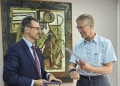
This was the focus of their discussions when the WHO Representative in Nigeria, Dr. Pavel Ursu, met with the Norwegian Ambassador to Nigeria, Ambassador Svein Baera, in Abuja.
SINL NIgeria Online reports that the meeting underscored a shared resolve to accelerate progress toward Nigeria’s national health targets by translating strategic partnerships into measurable health outcomes for citizens across the country.
Specific areas of collaboration include strengthening primary health care services, expanding digital health systems, and improving real-time disease surveillance to support faster and data-driven decision-making in the health sector.
In addition, highlight of the partnership is the continued scale-up and effective deployment of the District Health Information System 2 (DHIS2), with technical support from the Health Information Systems Programme (HISP) Centre at the University of Oslo, Norway.
The initiative is expected to further enhance Nigeria’s national health data management and response systems.
Similarly, the discussions also addressed Nigeria’s immunization challenges, as coverage levels remain below the global target of 90 percent. Efforts are being intensified to reach zero-dose children, strengthen routine immunization services, and bridge existing equity gaps in underserved communities.
On polio eradication, both parties stressed the importance of robust surveillance systems and a skilled frontline health workforce to halt the transmission of variant poliovirus.
Meanwhile, WHO reaffirmed its support for workforce training, integration of health data systems, and advocacy for increased domestic investment in the health sector, alongside contributions from development partners.
The meeting also emphasised commitment to coordinated partnerships, stronger health systems, and improved use of data.