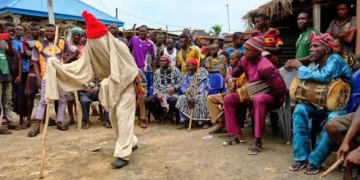












The recent events in Ozoro, Delta State, have shocked the conscience of Nigeria and the world. What was once known as the Alue-Do festival, a cultural celebration in the Isoko North Local Government Area, has now been stained with disgrace after young men turned it into a platform for violence against women.
In broad daylight, innocent ladies were harassed, stripped, and in some cases allegedly raped, while community leaders stood accused of encouraging or at least tolerating this barbaric act. Videos circulated online showed women running for safety as mobs of youths pursued them, tearing their clothes and violating their dignity. The sheer foolishness of such actions, carried out under the guise of tradition, has rightly provoked outrage.
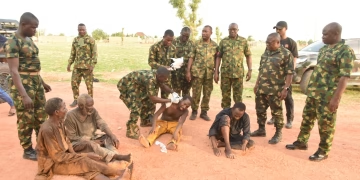
Historically, the Alue-Do festival was meant to be a time of communal gathering and cultural pride. Women were traditionally expected to remain indoors during certain hours, but never was rape or assault part of its practice. What happened in 2026 was not culture—it was criminality. Reports indicate that some community leaders, including Chief Omorede Sunday of Oramudu quarters, were arrested alongside others alleged to have organised or encouraged the violence. The Delta State government condemned the acts as barbaric and unacceptable, stressing that no tradition can justify sexual violence. Yet the fact that such atrocities occurred at all raises troubling questions: how could the leadership of a community allow its youth to descend into such savagery? How could they fail to protect their women, the very backbone of society?
The world now looks at Nigeria with disbelief. In the 21st century, when nations are striving for progress and equality, the image of young men raping women in the streets under the banner of a festival is a stain on our collective reputation. It suggests backwardness, a disregard for human rights, and a failure to protect the most vulnerable. Nigerian women, like all women, have the right to safety, dignity, and freedom from violence. To strip them of these rights in the name of tradition is not only foolish but criminal. It is a betrayal of our values and a mockery of justice.
This so-called festival must be condemned in the strongest terms. Rape is not culture. It is a crime. Communities must reject harmful practices disguised as tradition, and leaders must be held accountable for enabling or ignoring violence. Youths must be educated to understand that masculinity is not measured by domination or cruelty, but by respect and responsibility. Civil society and the media must continue to expose such atrocities, ensuring that they are never repeated. And the government must prosecute offenders to the fullest extent of the law, sending a clear message that Nigeria will not tolerate barbarism masquerading as culture.
The Ozoro incident is a wake-up call. We must choose progress over foolishness, justice over silence, and dignity over disgrace. Our women deserve protection, not persecution. Our culture must be a source of pride, not shame. And our nation must stand for humanity, not barbarism. The world is watching, and history will judge us not by the festivals we hold, but by how we treat our women.
For comments, reflections, and further conversation:
📧 Email: samuelagogo4one@yahoo.com
📞 Phone: +2348055847364