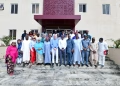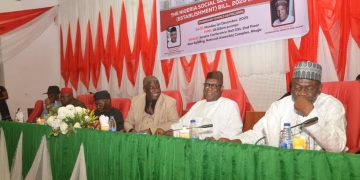



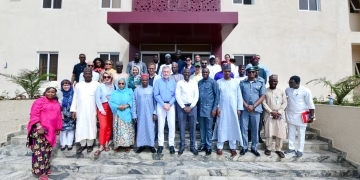


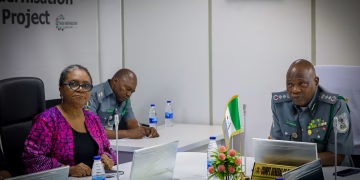


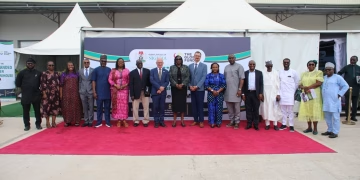
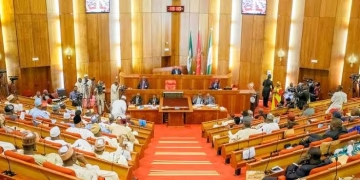



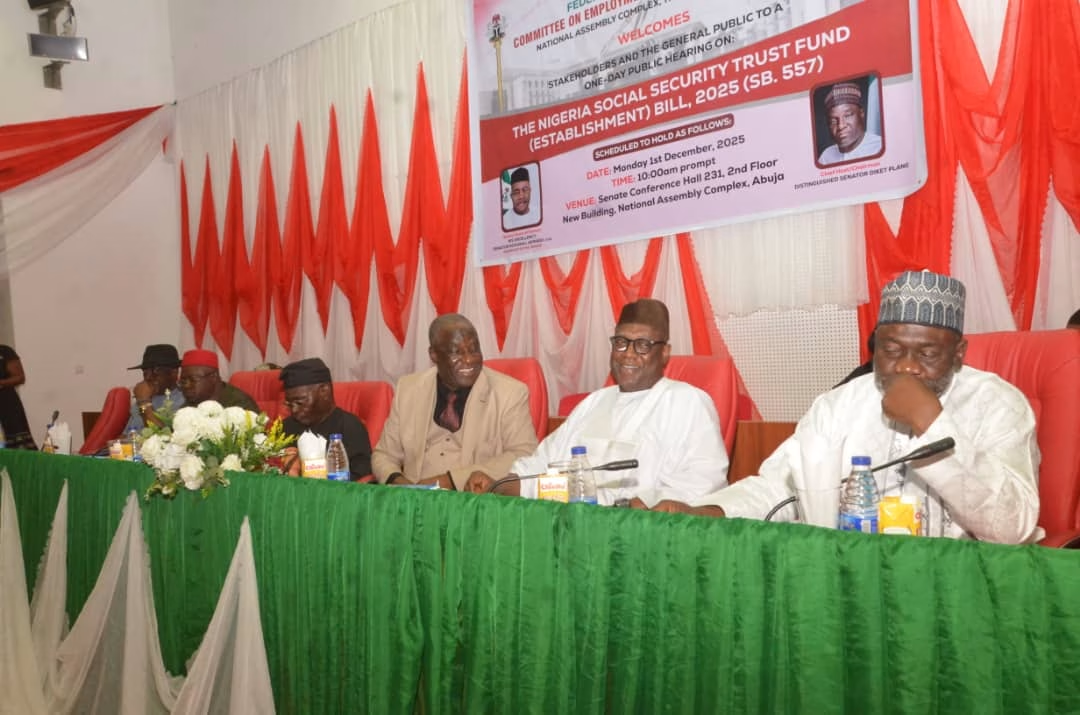
A one-day public hearing on the Nigeria Social Security Trust Fund (Establishment) Bill, 2025 (SB. 557) on Monday gathered stakeholders in Abuja.
The Senate Committee on Employment, Labour and Productivity convened the public hearing.
Specifically, the committee assured stakeholders that their concerns and recommendations would be fully considered in shaping a stronger, more inclusive social security framework for Nigeria.
The chairman of the committee, Senator Diket Plang (APC, Plateau Central) made this known in an opening remarks.
Senator Plang stressed the significance of the public hearing to the Senate’s commitment to transparent and participatory lawmaking.
He described the hearing as a critical step in strengthening workers’ compensation and welfare systems in the country.
He noted that such engagements provide experts and affected stakeholders the opportunity to make meaningful contributions toward refining legislation with far-reaching socio-economic impact.
Also speaking, the sponsor of the bill, Senator Cyril Oluwole Fasuyi, (APC, Ekiti North), noted that the proposed repeal of the Nigeria Social Insurance Trust Fund Act, 1993 and the Employees’ Compensation Act, 2010, and the establishment of the Nigeria Social Security Trust Fund, alongside 45 related provisions is captured in Senate Bill 557.
According to the sponsor of the bill, the public hearing was a significant milestone in Nigeria’s efforts to strengthen labour protection and social security systems.
He added that the bill was designed to reinforce existing protection mechanisms and ensure that labour institutions remain responsive to the evolving demands of a modern economy.
Meanwhile, the Managing Director and Chief Executive Officer of the National Social Insurance Trust Fund, Barrister Oluwaseun Mayomi Faleye, acknowledged that the bill was the outcome of engagements and retreats between the agency and the National Assembly in 2024.
He said the amendments would strengthen NSITF’s enforcement capacity, enhance transparency, improve claims processing through digital platforms and significantly expand coverage to include the informal sector.
“The informal sector is one of the largest employers in Nigeria.
Bringing them into the compensation and insurance framework is a critical step forward,” Faley said.
He also defended the proposal to replace the independent investment committee with a board-led committee, stressing that the new structure would improve efficiency, reduce bureaucracy and accelerate decision-making.
Additionally, the Minister of Labour and Employment, Muhammadu Maigari Dingyadi, applauded the Senate for its inclusive approach.
He affirmed that the National Assembly has the constitutional mandate to enact laws in the best interests of Nigerians, including those governing agencies that are not directly funded by the Federal Government.
“What we are witnessing today is democracy in action. Every voice is being heard, and at the end of the day, the result will be a more effective, efficient and people-centred institution,” Dingyadi remarked.