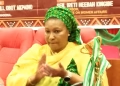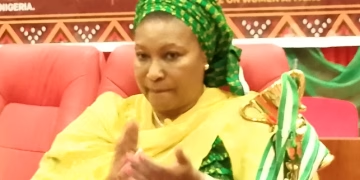






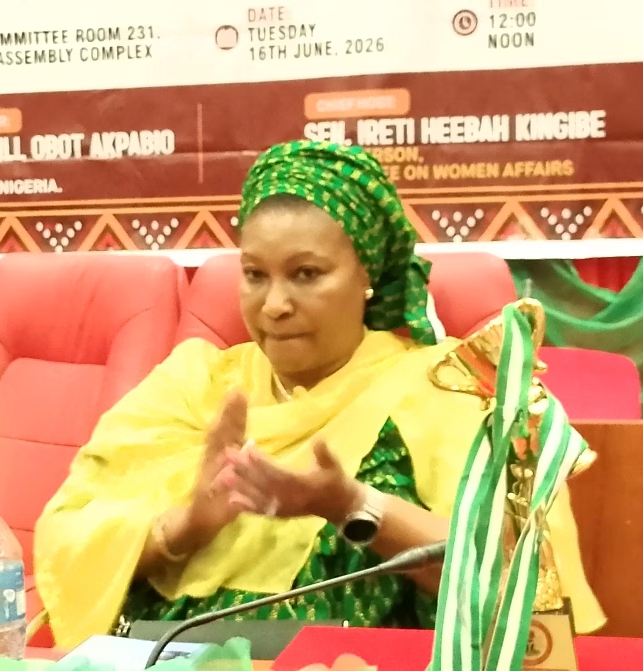
(SINL NIGERIA) Chairman of the Senate Committee on Women Affairs, Senator Ireti Kingibe, has canvassed urgent and sustained action to ensure that every African child has access to clean water, sanitation, and hygiene (WASH) facilities, describing them as fundamental rights essential to children’s health, education, and overall development.
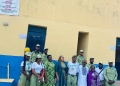
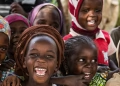
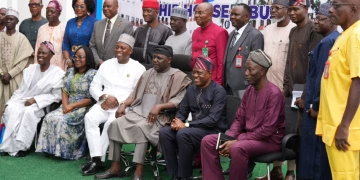
Kingibe made the call on Tuesday in Abuja during the commemoration of the 2026 International Day of the African Child, where she addressed students from various schools across the Federal Capital Territory (FCT) and other stakeholders.
The senator stressed that children should be able to concentrate on learning and personal growth without worrying about access to basic necessities.
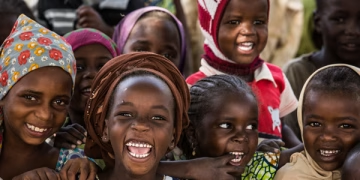
According to her, children represent the future leaders of Nigeria and deserve environments that support their wellbeing and educational advancement.
“Water is life. Sanitation is dignity. Hygiene is health,” Kingibe said, noting that inadequate access to clean water in schools continues to undermine children’s education, health, and wellbeing.
She emphasized that access to clean water and sanitation should not be viewed as privileges but as rights that must be guaranteed for every child.
The lawmaker assured participants that the National Assembly would continue to champion legislation, budgetary provisions, and policies aimed at providing safe and healthy learning environments for children across the country.
“We cannot build a great nation if we do not build clean, safe environments for our children to grow and learn,” she stated.
Kingibe also encouraged children to pursue their dreams and remain committed to their education, assuring them that leaders have a responsibility to provide the infrastructure and support necessary for their success.
Also speaking at the event, a representative of the Director-General of the National Agency for the Prohibition of Trafficking in Persons (NAPTIP), Dr. Ebele Ulasi, linked child welfare to broader challenges affecting African children, including human trafficking, child labour, child marriage, and other forms of exploitation.
Ulasi noted that children account for a significant proportion of trafficking victims across Africa, making child protection a critical component of national development efforts.
“The future of any nation that does not plan strategically for its children will be bleak, hopeless, and full of despair,” she said.
She described this year’s theme, “Ensuring Universal Access to Water, Sanitation and Hygiene for Every Child in Africa,” as timely and significant, stressing that adequate WASH facilities are essential for children’s health, dignity, and development.
Ulasi however commended the Senate Committee on Women Affairs for bringing national attention to the issue and urged governments, civil society organisations, development partners, and communities to collaborate in improving access to clean water and sanitation facilities for children.
She added that achieving quality sanitation, hygiene, and water access for every child requires collective action, noting that government efforts alone would not be sufficient.
SINL NIgeria Online reports that the International Day of the African Child is commemorated annually to promote the rights, welfare, and development of children across Africa while drawing attention to the challenges affecting their wellbeing and future prospects.