






(SINL NIGERIA) The minister of information and National Orientation, Alhaji Mohammed Idris has reaffirmed the vital role of journalism, digital communication, and media innovation in strengthening democracy, protecting human rights, and promoting national development.
Speaking at the 2026 World Press Freedom Day on Thursday in Abuja, Idris noted that journalism remains one of the strongest instruments for truth, accountability, and democratic participation in society.
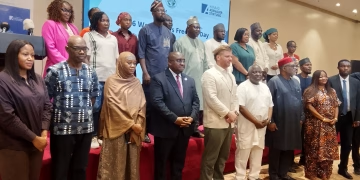
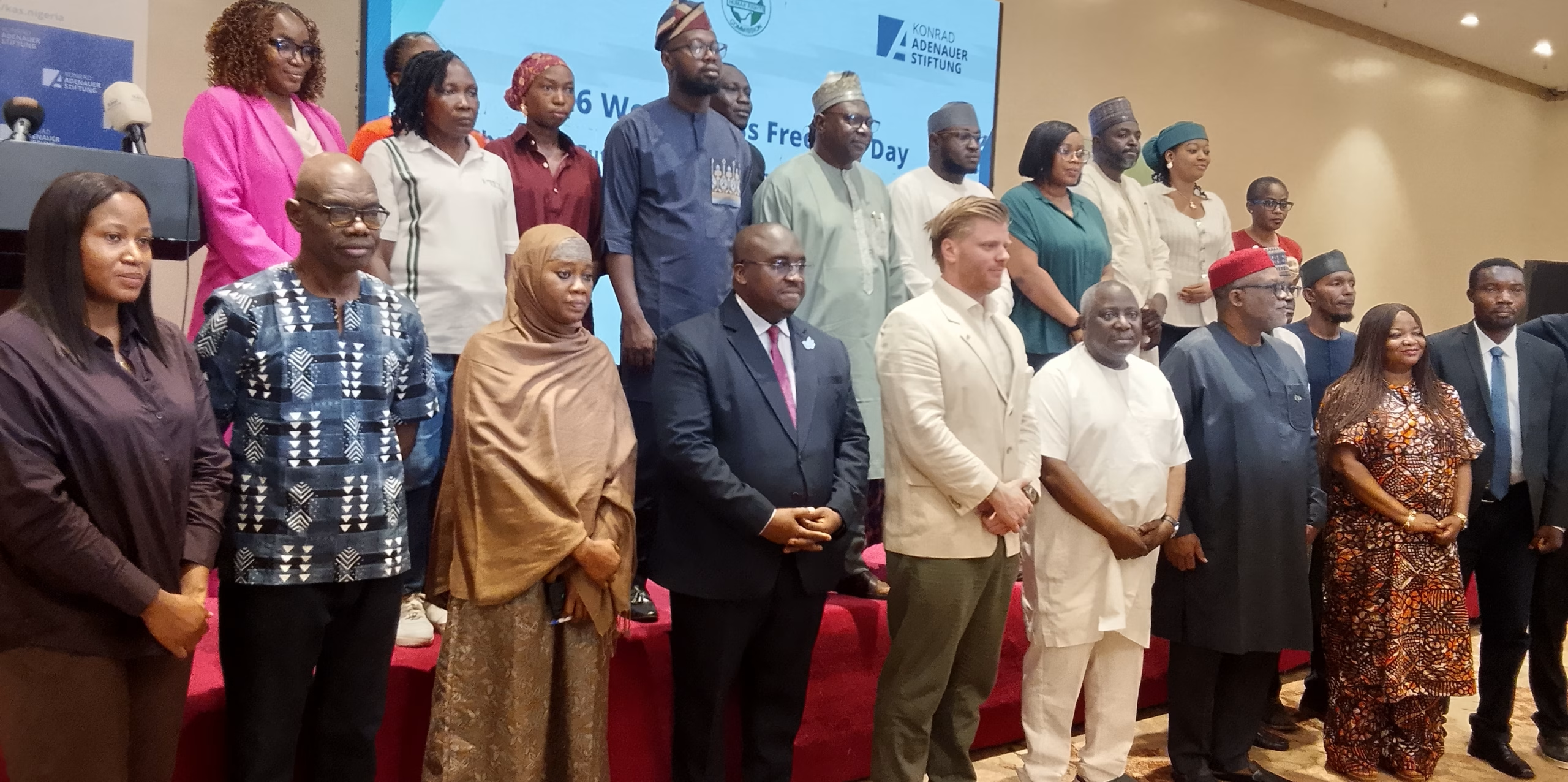
The event organized by the Centre for Journalism Innovation and Development (CJID), Konrad Adenauer Stiftung and the National Human Rights Commission (NHRC), themed: Shaping a future at Peace: Promoting Press Freedom for Human Rights, Development, and Security, the minister observed that peace and democracy cannot flourish where freedom of expression is suppressed, saying sustainable development depends on an informed and enlightened citizenry.
The minister, represented by Dr. Dili Ezughah, Executive Secretary, Nigerian Press Council explained that the administration of President Bola Tinubu remains committed to protecting individual rights, including freedom of expression and media independence within the framework of the law.
Highlighting the impact of technology on governance and development, Idris emphasized the importance of digital literacy, cybersecurity, innovation, and workforce development in preparing young people for the future digital economy.
He made reference to the Special Technical Talent Programme introduced in 2019 through collaboration in digital communications, innovation, and the digital economy sector.
The initiative, according to the minister was designed to empower young talents with digital skills, global connectivity, and opportunities for innovation-driven growth.
He also commended the efforts of government institutions, civil society organisations, media development groups, and international partners for their contributions toward digital transformation, media innovation, human security, and the promotion of freedom of expression.
Special recognition was given to CJID for its sustained support in advancing digital architecture, media development, and democratic values across the globe.
He stressed the need for journalists and media practitioners “to uphold professionalism, factual reporting, balance, and ethical standards in the face of growing challenges such as fake news, disinformation, hate speech, and divisive narratives”.
“While technology has expanded access to information, it has also increased the speed at which falsehood and misleading content can spread. Therefore, the future of journalism must remain anchored on truth, professionalism, innovation, and public trust,” the minister stated.
The minister called for unity, cooperation, and shared commitment among government institutions, the media, civil society, and international partners in advancing democratic values and protecting citizens’ rights.
In a separate remarks, Executive Secretary of the National Human Rights Commission (NHRC), Dr. Tony Ojukwu SAN reiterated that press freedom, freedom of expression, and access to information remain fundamental pillars for democracy, peace, accountability, and human dignity in Nigeria and across the world.
According to the Commission, this year’s theme, “Shaping a Future of Action: Promoting Press Freedom for Peaceful, Inclusive Development and Prosperity,” comes at a significant time when democratic values, civic space, and media freedom continue to face growing pressure in many parts of the world.
Ojukwu, who spoke through, a Senior Human Rights Advisor, Dr. Hilary Ogbonna noted that Nigeria remains committed to maintaining an ecosystem that protects journalists, supports media institutions, and guarantees citizens the right to seek remedies whenever violations occur.
“Societies where journalists are intimidated, censored, attacked, or silenced cannot genuinely claim to be democratic, peaceful, or secure” Ojukwu said.
He added “Press freedom is not merely an abstract ideal; it is a practical necessity for national development, peacebuilding, transparency, and accountability,”.
The NHRC emphasized the important role journalists play in exposing corruption, amplifying marginalized voices, promoting civic engagement, and strengthening democratic governance through investigative reporting and public accountability.
The Commission, however, expressed concern over increasing threats faced by journalists and media professionals, including intimidation, cyber attacks, shrinking civic space, harassment, and the misuse of laws to suppress critical reporting.
The NHRC also expressed support for legislative initiatives aimed at strengthening media freedom and democratic governance in Nigeria.
The Commission commended development partners and organisations, including the Center for Journalism Innovation and Development and other civil society groups, for their continued contributions to media development, digital rights, civic engagement, rule of law, and human rights advocacy in Nigeria and across Africa.
Highlighting the importance of media and civic engagement, resident representative Konrad Adenauer Stiftung in Nigeria, Moritz Sprenker
urged professionals and democratic actors to remain steadfast in asking critical questions, promoting constructive debate, and contributing meaningfully to societal development.
“You are part of democratic institutions, and you have a responsibility to train people, contribute to public debate, and defend democratic values every day. Your work will definitely make a difference,” he stated.
Sprenker concluded with a call for sustained commitment to openness, professionalism, and the protection of democratic principles across societies.
He expressed appreciation to participants for their dedication and encouraged them to continue advancing dialogue and democratic engagement.
Highlight of event was the official launch of the Press Attack Tracker (PAT West Africa), by Akintunde Babatunde, Executive Director, CJID.
Other highlights include, two training sessions by CJID on Strategic Approaches and Dignity-centered conduct in Human Rights Reporting for Journalists and Legal First Aid for Journalists anchored by Hauwa Nuhu and Christiana Longe respectively.